• Suit 08, Smart Bridge Plaza, Utako, Abuja, Nigeria
  • Mon - Fri 8.00 - 16.00. Sunday CLOSED

Author Archives: sppnigeria

Prof. Okereke Organises IVLP- Funded Tree Planting Exercise In Enugu

International climate expert and leading advocate for climate action in Nigeria, Professor Chukwumerije Okereke has organized a climate education and tree planting exercise in Enugu State.

The state tree planting exercise is one of the programmes mapped out for the implementation of the International Visitors’ Leadership Programme (IVLP) impact award given to Prof.l Chukwumerije Okereke by the United States Department of State’s Bureau of Educational and Cultural Affairs.Nigeria

The exercise involved the planting of 35 ornamental trees along the road from P&T Bus Stop towards Ziks Avenue in a bid to raise awareness about the dangers of climate change and urban air pollution and the positive role of urban greening in combating both challenges.

The state tree planting exercise was flagged off by the Hon. Commissioner for Environment Enugu state who was represented by the Permanent Secretary of State Ministry of Environment Mr. Albert Obiora Ekete.

The flag-off was witnessed by 24 young leaders present, staff of the state ministry of Environment, CEO of Eco-cyclers, Ms Oge Nwonye, a Member of the State Government Palliative Team, Mr. Basil Ojengwa, and many other volunteers who joined the exercise.

The young leaders had been selected from over 4,000 applications to be trained on the fundamentals of climate change science, urban air pollution, and climate advocacy to equip them to become more active citizens and more effective in spreading the message of climate action.

A total of 35 ornamental trees (Green Ficus) were planted by the participants with help and support from the staff of the State Ministry of Environment that came with the Permanent Secretary.

Each of the participants present planted a tree after the flag-off was done by the Permanent Secretary. The campaign also involved an arrangement with the State Ministry of Environment to water and care for the trees to ensure they survive and flourish.

He said that trees symbolize a profound commitment to addressing the pressing challenges of air pollution and climate change that have been plaguing the state.

He said that trees stand as silent sentinels, poised to purify the air, mitigate the effects of climate change, and restore the balance of the local ecosystem.

Professor Okereke thanked the Hon Commissioner for Environment, Prof Sam Ugwu, the Permanent Secretary Albert Obiora Ekete, and the entire staff of the State Ministry of Environment for supporting the exercise.

He thanked the United States Department of State’s Bureau of Educational and Cultural Affairs and their implementing partner Meridian International for giving him the opportunity, to contribute to climate awareness, leadership training, and the sustainable development of Enugu State through the IVLP impact program.

He assured them that he is committed to working with them to empower more young leaders in the state and beyond to become active citizens in promoting stronger climate and environmental action in the state.

The young leaders were informed that the next activity will be the school visit to educate the students on Urban greening and tree planting.

For the organization and implementation of the programme, Professor Okereke was actively supported by Eco-cyclers, the Center for Climate Change and Development, and the Society for Planet and Prosperity.

Battling climate change ‘requires political will, leadership & commitment’ to ‘real action’

The Africa Climate Summit has brought together African leaders, with a goal of defining a shared vision for green development on the continent of 1.4 billion people ahead of the COP28 meeting in Dubai later this year. With climate change eating away at Africa’s GDP, a point highlighted by the summit’s host, Kenya President William Ruto, FRANCE 24’s Annette Young is joined by Dr. Chukwumerije Okereke, Professor in Global Governance & Public Policy in the School for Policy Studies at the University of Bristol in the UK.

Okereke, IVLP Awardee, Tutors Young Leaders on Climate Change Advocacy

Prof Chukwumerije Okereke, an internationally recognised climate expert and an awardee of the International

The two-day event that held from August 15 to 16, 2023, focused on “Climate Change: Science and Policy” on the first day and on the second day the focus was on “Effective Climate change communication”.

The recipient of the award, Prof. Okereke, took the participants through the selection process of the IVLP participants, saying: “You cannot apply to participate in the IVLP, participants are nominated and selected annually by staff at US Embassies around the world and the participants are current and emerging foreign leaders in a variety of fields.”

He listed some notable IVLP alumni to include: Prime Minister Jacinda Ardern of New Zealand, President Nicolas Sarkozy of France, President Hamid Karzai of Afghanistan, Prime Minister Margaret Thatcher of the United Kingdom, Prime Minister Gordon Brown of the United Kingdom.

On the topic “Understanding the links between climate change and air pollution: causes, impact, and solution”, the guest speaker, Dr. Daniel Ugwu of David Umahi University of Health Science, stated that the link between climate change and air pollution is that both are a product of greenhouse gas emission. Improper waste disposal and indiscriminate burning of refuse dump stands are the major cause of air pollution in urban areas, Dr. Ugwu maintained.

According to him, some of the solutions to air pollution in urban centres include: awareness creation, and reviving eco-friendly traditional values and practices, among others.

Prof A. Moneke Director of the Centre for Environmental Management and Control at the University of Nigeria, Nsukka, while speaking on “Gas flaring and air quality issue”, stated that air pollution in Nigeria contributes to untimely death and other ailments and that it will be great if the training of young climate leaders can expand to other parts of the country especially the South-South geopolitical zone where the issue of gas flaring is almost making the area inhabitable.

“Planting trees around the environment will make Nigerians healthy by giving oxygen as against the common practice of using concrete slabs that produce heat,” Prof Moneke stated.

On effective climate change communication, Dr. Chinwe Ogunji of Alex Ekwueme Federal University, Ebonyi State, and Mrs. Ogechi Nwonye, Executive Director of Eco-Cyclersboth, agreed that the greatest difference between communicating climate change and other science topics is the call to action either explicit or implicit to reduce the effects of climate change.

The action can come through climate change education to raise awareness on the impact of climate change and take the lead on how to protect the environment as climate change affect all and sundry, the duo stated.

They maintained that, to communicate climate change effectively, the following tips are helpful: having a grip of climate change, listening to open dialogue, and showing people the link between human activity and climate change.

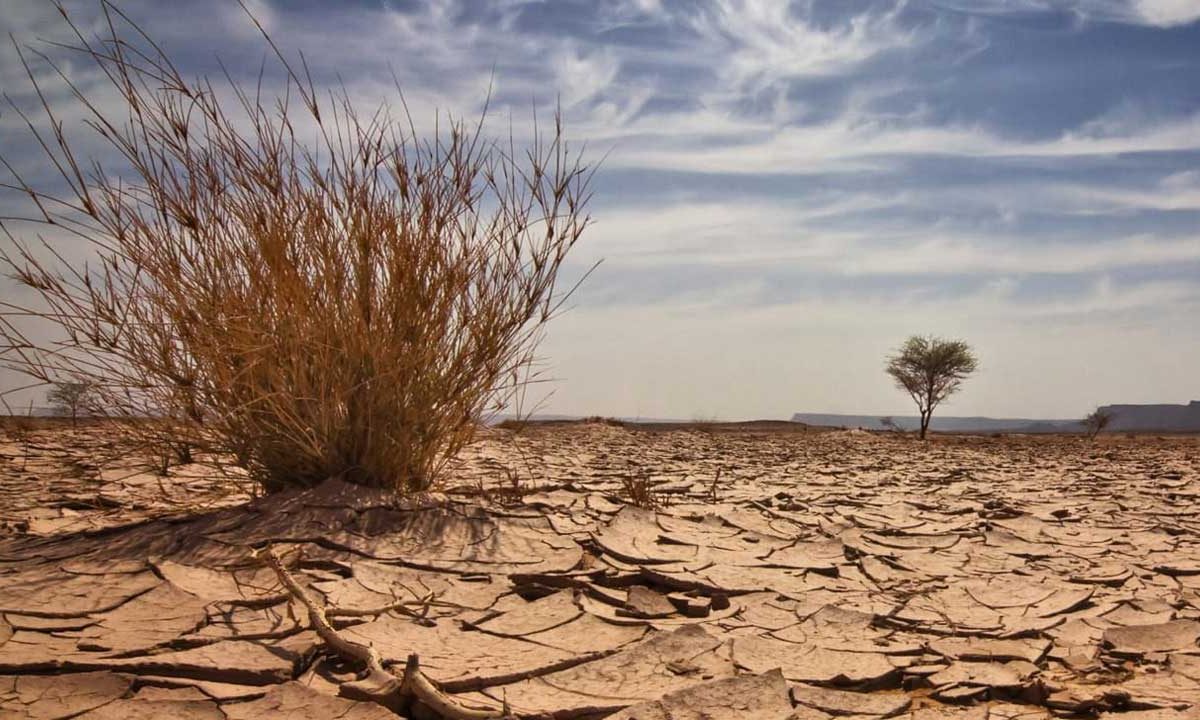
There was a presentation on the impacts of climate change in Enugu State from the Director of Climate Change Department, Enugu State Ministry of Environment, Mr. Arum Nnamdi, who stated that Enugu State is being threatened by desert encroachment and that, if care was not taken through tree planting, the situation might get worse.

He listed some local governments currently battling erosion in the state as: Udi, Nsukka, and Igbo Etiti, among others. During the rainy season, some communities in Aninri and Oji River Local Government Areas of the state are always affected by flooding, added Arum.

The highlight of the two-day of training was the visit of the new commissioner for Environment and Climate Change in Enugu State, Prof. Sam Ugwu, who assured the young leaders that his office would be happy to partner with young climate activists on ways to better the environmental condition of the state.

“I will like to work with you the young climate leaders because your activities are part of the core values of the state Ministry of Environment so I encourage you to do proposals to the ministry on areas of collaboration,” Prof Ugwu stated.

He promised the young leaders that he would ensure that the Enugu State environmental law is passed so that the environmental protection of Enugu State will have strong legal backing.

The awardee, Prof. Okereke, stated that the next step of the project would include planting trees within Enugu by the young leaders and doing climate change education in selected secondary schools within Enugu city. He asked the participants to design any campaign on climate action that they will like to run as a way of implementing what they have learned from the training.

The project is funded by the United States Department of States with Meridian International as their implementing partner.

By Elochukwu E. Anieze

First published in www.environewsnigeria.com

Stakeholders explore strategies to advance climate change adaptation in Nigeria

Africa Policy Research Institute (APRI) and the Centre for Climate Change & Development, Alex Ekwueme Federal University, Ndufu-Alike Nigeria (CCCD- AEFUNAI), in collaboration with the Department of Climate Change (DCC), Federal Ministry of Environment Nigeria held a workshop to discuss and share knowledge about climate change adaptation in Nigeria.

The workshop brought together key policymakers, civil society organisations (CSOs, non-organisation organisations (NGOs) and other relevant stakeholders to develop key policy priorities for locally-led adaptation to climate change in Nigeria.

Executive Director of APRI, Dr Olumide Abimbola, said: “APRI has a dedicated focus to providing policy options and alternatives to African policymakers and civil society actors. We provide valuable insights into the power of locally-led adaptation and the transformative potential for building climate resilience at the grassroots level.”

This was underscored in the presentation of deep-dive case studies of locally-led adaptation actions in Anambra, Lagos and Ogun states by Dr. Chukwueloka Okeke, a Research Fellow at APRI, who showed that local communities were at the forefront of climate adaptation actions, but were mostly limited by lack of access to funds and relevant information to be effective and sustainable in their efforts.

A senior non-resident Fellow at APRI and Director of CCCD- AEFUNAI, Prof. Chukwumerije Okereke, stressed the importance of locally-led adaptation actions by noting that numerous ethnic groups and indigenous peoples of Nigeria had been carrying out adaptation actions for centuries, but the scale, extent, and efficiency of their actions had not been fully evaluated. “So, we need to make sure that we are really highlighting those local practices that can help and then attracting international funding to scale them up.”

The Director of the Department of Climate Change, Dr. (Mrs.) Iniobong Abiola-Awe, noted that Nigeria has made stringent efforts toward enhancing its adaptation action plans by developing several national action plans and policy frameworks such as the National Adaptation Framework with the objectives: “to clarify the country’s approach to its national adaptation process and serve as a reference point for bringing together various adaptation planning efforts from different sectors and scales of decision making”.
The Head of the Climate Change Programme at APRI,

Dr. Grace Mbungu, said: “Release of this report comes at a critical juncture, as the world grapples with the impacts of climate change. It serves as a call to action for policymakers, practitioners, civil society, and the international community to enhance support for locally-led climate change adaptation strategies”. She then commended the researchers, practitioners, and stakeholders who have dedicated their expertise and time to produce this comprehensive study.

Meanwhile, the event attracted a diverse audience, including representatives from government agencies and ministries, civil society organisations (CSOs), non-governmental organisations (NGOs), academia, youth, and private sector representatives. Participants highlighted the importance of developing synergies between all key stakeholders in a way that would enhance the delivery and implementation of the climate adaptation plans of Nigeria in line with Nigeria’s Nationally Determined Contributions, National Adaptation Plan Framework, other national climate action policies and the Sustainable Development Goals (SDGs).

This comprehensive report delved into the critical issue of climate change adaptation and explores locally-led strategies and initiatives to address the challenges posed by climate change in Nigeria, identifying barriers and enabling factors for adaptation to inform the country’s Nationally-Determined Contribution (NDC) implementation.

The report, which is based on rigorous research and case studies conducted across various ecological zones of Nigeria, highlights the growing impact of climate change on vulnerable communities and ecosystems. It sheds light on the importance of locally-led adaptation as a key approach to building resilience and safeguarding livelihoods in the face of climate-related risks.

The report also underscores the significance of placing local communities at the heart of climate change adaptation efforts.
During the event, speakers emphasised the importance of collaboration in climate change adaptation and the role of locally-led initiatives.